
Mold Remediation Georgia
Mold remediation Georgia homeowners trust connects homeowners with licensed crews built for a subtropical climate that holds 65 to 75 percent humidity for most of the year, which is exactly the range mold needs to take hold. If you found a dark patch behind the guest bathroom vanity, smelled something musty in the crawl space, or your home inspector flagged moisture readings before closing, you need a crew that can inspect, test, and remove it correctly the first time. We connect Georgia homeowners with licensed mold remediation contractors who handle black mold removal, attic and crawl space treatment, HVAC mold cleanup, and full remediation projects across the state.
Call Now: 1 (866) 364-0572What Atlanta homeowners ask us first
- Is this actually mold, or just surface staining and dirt?
- Will my homeowners insurance cover any of the remediation cost?
- How fast does mold spread once a leak or flood has soaked drywall?
- Can I clean it myself, or does this need a licensed crew?
DIY vs Professional Mold Remediation: When to Call a Pro in Georgia
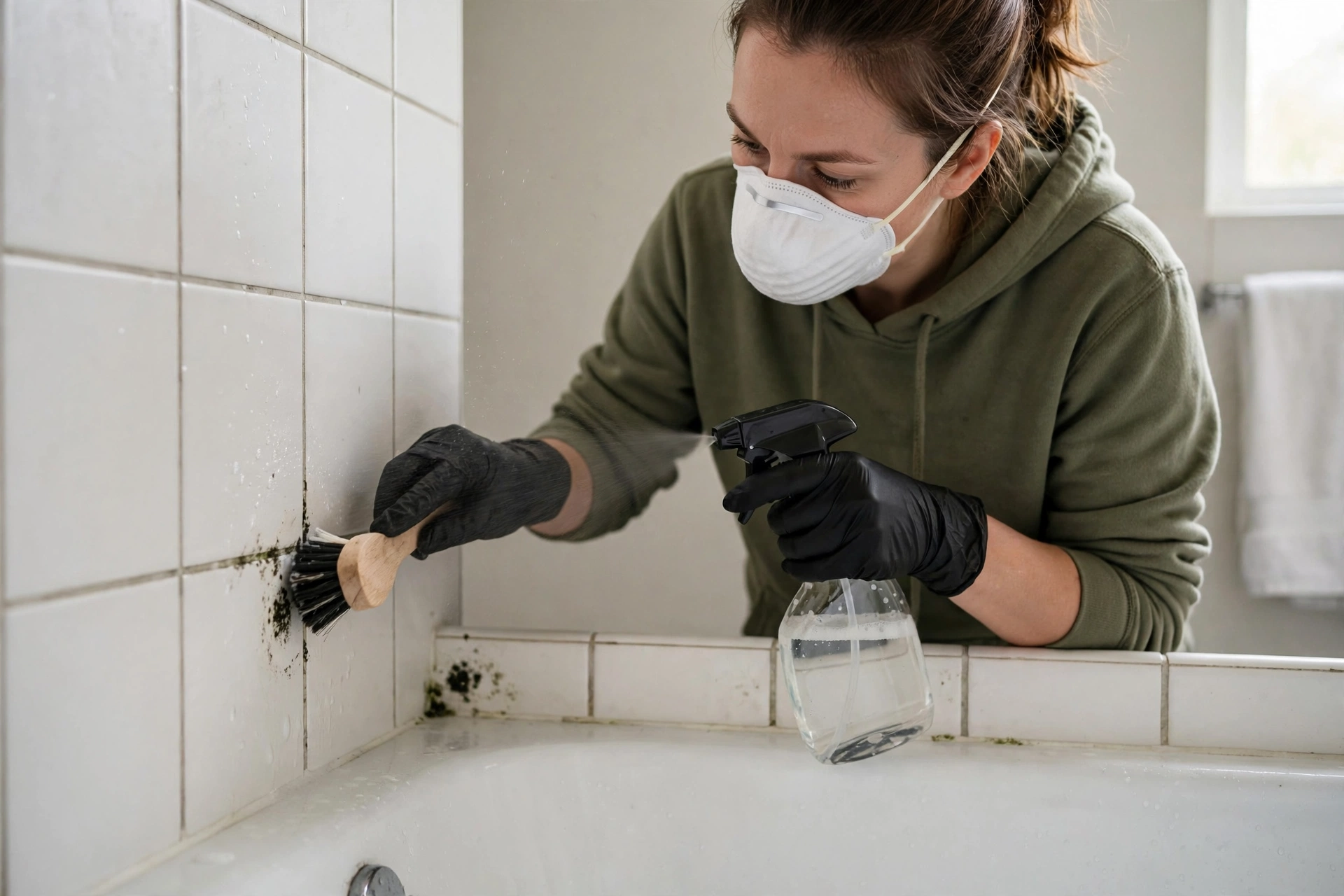
You spotted dark spots on the bathroom tile, or maybe a musty smell is coming from the crawlspace, and now you are facing the classic homeowner dilemma: scrub it yourself this weekend, or call a professional mold remediation company? The honest answer is that both are right, depending on the situation. Some mold jobs are perfectly reasonable DIY projects. Others genuinely need trained crews, containment barriers, and commercial drying equipment. Getting this decision wrong in either direction costs money. Do it yourself when you should have called a pro, and the mold comes back worse. Call a pro for a ten-minute scrub job, and you overpaid.
The Short Answer
DIY mold cleanup is reasonable for small patches, roughly less than 10 square feet, on hard, non-porous surfaces like tile, glass, or metal, provided you wear proper protective gear and you fix the moisture source that caused it. Call a professional when the affected area is larger than about 10 square feet, when mold is in your HVAC system or ductwork, when it appeared after flooding or a major leak, when you can smell mold but cannot find it, when it keeps coming back after cleaning, or when anyone in the household has asthma, severe allergies, or a weakened immune system. If you are unsure which side of the line you are on, a mold inspection service can assess the extent of the problem before you commit to either path.
What DIY Mold Cleanup Can Safely Handle
There is a category of mold problems that genuinely do not need a professional, and there is no shame in handling them yourself. The classic example is surface mold on bathroom tile or grout, the kind that shows up in a shower that does not ventilate well. Small spots on window sills from condensation, mildew on a basement wall that gets damp in summer, and mold on the rubber gasket of a washing machine all fall in the same category: visible, limited in size, and growing on surfaces you can fully reach and fully dry.
The key word is surface. DIY works when the mold is growing on top of a hard, non-porous material and has not penetrated into it. Scrub the visible growth with detergent and water, rinse, and then dry the area completely. Drying matters as much as cleaning. Mold needs moisture to grow, and a surface that stays damp after you clean it will simply grow a fresh colony within days, especially in a Georgia summer when indoor humidity can sit above 60 percent without air conditioning running steadily.
Safety gear is not optional, even for small jobs. At minimum, wear an N95 respirator mask, not a paper dust mask, along with gloves that extend past the wrist and goggles without ventilation holes. Open a window or run a bathroom exhaust fan for ventilation, and keep the door to the rest of the house closed while you work.
A note on bleach, since it comes up in nearly every DIY mold conversation. Bleach can kill surface mold on hard, non-porous materials, but it does not penetrate porous materials like drywall, wood, or grout lines deeply enough to kill roots embedded inside. On those materials, the water in the bleach solution can actually feed the deeper growth while the surface looks clean. For porous surfaces with more than superficial staining, scrubbing with detergent followed by thorough drying is the more reliable DIY approach. And never mix bleach with ammonia or with any other cleaner. The resulting fumes are dangerous, and this is one of the few DIY mold mistakes that can send someone to the emergency room.
The 10-Square-Foot Rule (and Why It Exists)
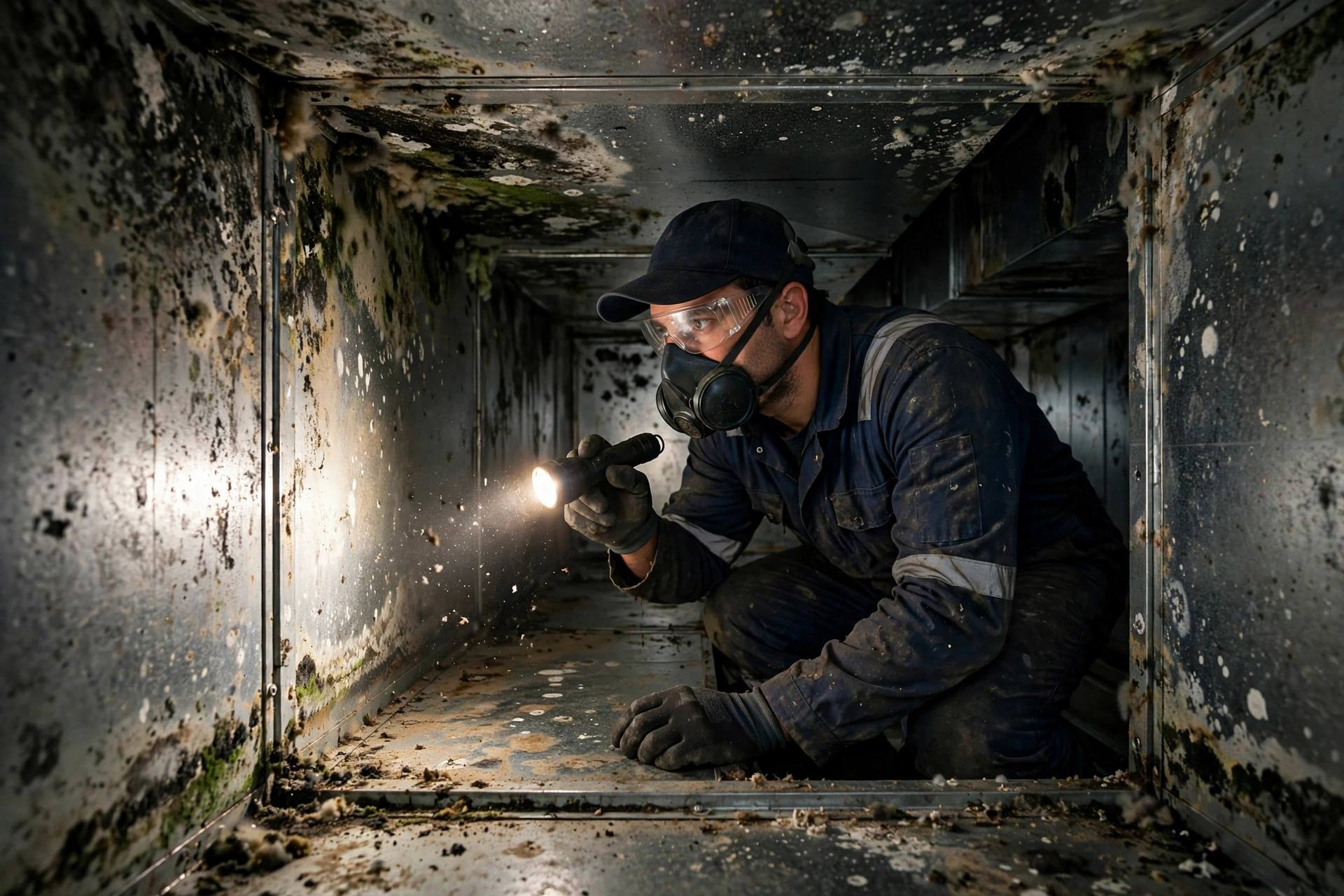
The U.S. Environmental Protection Agency suggests that mold covering more than about 10 square feet, roughly a 3-by-3-foot patch, is generally beyond DIY territory. This is a guideline, not a law, but it exists for practical reasons. Once a colony reaches that size, the number of spores released during cleaning becomes significant, containing the work area gets difficult without real barriers and negative air pressure, and there is a good chance the visible patch is only part of a larger problem behind the wall or under the floor.
To estimate size, measure the visible patch and add a generous margin, because mold on drywall or wood almost always extends beyond what you can see. A stain the size of a dinner plate on the surface can easily be twice that behind the surface. If your honest estimate lands anywhere near 10 square feet, treat it as a professional job. The threshold is also lower if the mold is in a sensitive location. Five square feet inside an air handler or on the supply side of ductwork affects the whole house, and that counts as a pro job regardless of the raw measurement. Location matters as much as size.
Real talk: most homeowners underestimate the size of their mold problem, not out of carelessness but because mold hides. The visible patch is the tip. If you pull back a section of baseboard or peek behind an access panel and find more, stop and reassess rather than pushing ahead with a DIY plan built for the smaller version of the job.
When You Need a Professional
Certain situations take mold out of DIY territory no matter how handy you are. These are the cases where professional equipment, training, and containment genuinely change the outcome.
Mold in Your HVAC System or Ductwork
If you see mold growth on or inside your air handler, on coils, or within ductwork, do not attempt to clean it yourself. Disturbing mold inside the system that circulates air through your entire home can spread spores to every room. Worse, aggressive DIY cleaning can damage coils, blower components, or duct lining. HVAC mold remediation requires shutting down the system, establishing containment around the equipment, and cleaning with HEPA-filtered vacuums and methods that do not push contamination downstream. If your Georgia home runs the air conditioner most of the year, and most do, the HVAC system is the last place you want to experiment.
Large or Widespread Growth
Anything clearly beyond the 10-square-foot guideline, mold spanning multiple rooms, or growth that covers a full wall, a ceiling section, or an entire closet interior calls for a professional crew. Large jobs typically involve removing contaminated porous materials like drywall and insulation, which must be done under containment so spores do not migrate through the house during demolition. Professionals also bring commercial dehumidifiers and air scrubbers that run for days to bring the space back to normal moisture levels. A box fan and a home dehumidifier cannot do the same job on the same timeline. For extensive visible growth, including what is commonly called black mold, black mold removal by a trained crew is the safer route, and toxic mold remediation protocols apply when testing has identified species of particular concern.
Mold After Flooding or Major Leaks
Mold that appears after flooding, a burst pipe, a roof leak that ran for weeks, or a sewage backup is a different category from everyday humidity mold. Floodwater, especially, carries contaminants, and porous materials soaked by it generally need to be removed rather than cleaned. The drying requirements are also more demanding: wall cavities, subfloors, and insulation must be verified dry with moisture meters, not just judged by touch. If your mold problem started with a water event, the water damage needs professional handling first, and mold remediation follows as part of that process.
Hidden Mold You Cannot Find
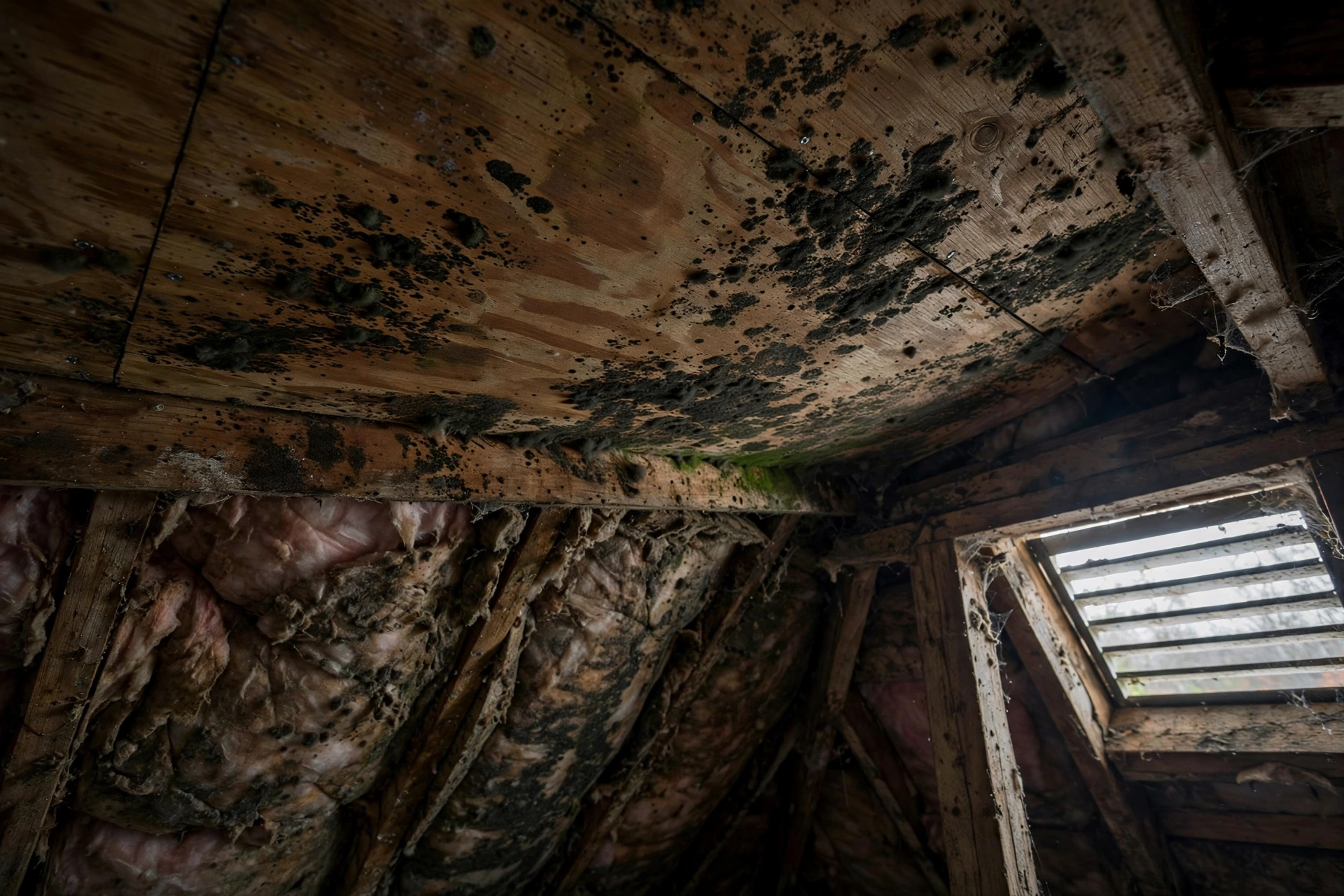
A persistent musty smell with no visible source, allergy symptoms that worsen at home, or mold that returns in the same spot after thorough cleaning all point to hidden growth. Common hiding places in Georgia homes include crawlspaces, attics, wall cavities behind plumbing, and under flooring. Finding hidden mold often requires moisture meters, infrared cameras, or controlled exploratory openings, which is inspection work, not DIY work. Attic mold removal, for example, frequently starts with discovering that a bathroom exhaust fan has been venting warm moist air into the attic for years, a cause that has to be corrected before any cleanup will last.
Health Concerns in the Household
If anyone in the home has asthma, severe mold allergies, chronic lung disease, or a weakened immune system, lean toward professional remediation even for jobs that might otherwise be DIY-sized. This is not about the mold being more difficult to clean. It is about the exposure during cleaning. Disturbing a colony releases a concentrated burst of spores, and people with respiratory sensitivity can react strongly. When in doubt, talk to your doctor about your specific situation, and let professionals handle the disturbance.
What Professional Remediation Actually Includes
Understanding what you are paying for helps you judge whether a quote is reasonable and whether a company is doing the job properly. Professional mold remediation follows a sequence, and skipping steps is how bad jobs happen.
It starts with inspection and moisture mapping. A competent crew identifies not just where mold is visible but where moisture is present, using meters and sometimes thermal imaging, and determines the water source. Remediation without fixing the moisture source is temporary by definition. This assessment phase is also where the scope gets defined: what materials stay, what gets removed, and what the containment plan looks like.
Next comes containment. The work area is sealed off from the rest of the house with plastic sheeting, and a negative air pressure setup with HEPA-filtered air scrubbers ensures air flows into the work area, not out of it. This is the step DIY cannot replicate meaningfully, and it is the main reason large jobs need professionals. Contaminated porous materials, typically drywall, insulation, and carpet in the affected zone, are removed and bagged inside containment. Remaining structural surfaces are HEPA-vacuumed and cleaned, and in some cases treated with antimicrobial products.
Then the space is dried to normal moisture levels and verified with meters, because remediation is not finished when the mold is gone. It is finished when the conditions that allowed mold are gone. Many reputable companies finish with clearance verification, either visual and moisture-based, or with mold testing to confirm spore levels are back to normal. After remediation, mold prevention treatment and humidity control, such as a properly sized dehumidifier in a Georgia crawlspace, are what keep the problem from returning.
The Role of Mold Testing and Inspection
Testing and inspection are related but different, and knowing the difference saves money. An inspection is a visual and moisture-based assessment by a trained person: finding the mold, finding the moisture, defining the scope. Testing means collecting air or surface samples and sending them to a laboratory to identify mold types and concentrations.
Testing makes sense in specific situations: when you need to confirm a hidden problem, when you want clearance documentation after a large remediation, during real estate transactions where an unbiased record matters, or when a doctor has asked for information about environmental exposure. Testing is less useful as a first step for a small visible patch that you can already see and measure. If you can see it, you mostly need to know how far it goes and what is feeding it, which is inspection work.
One practical tip for Georgia homeowners: be cautious of any company that insists on expensive testing before performing a basic inspection, or that uses alarming test results to pressure you into immediate full-house remediation. A legitimate assessment starts with eyes, a moisture meter, and questions about your home's history. Testing has its place, but it should answer a specific question, not serve as a sales tool.
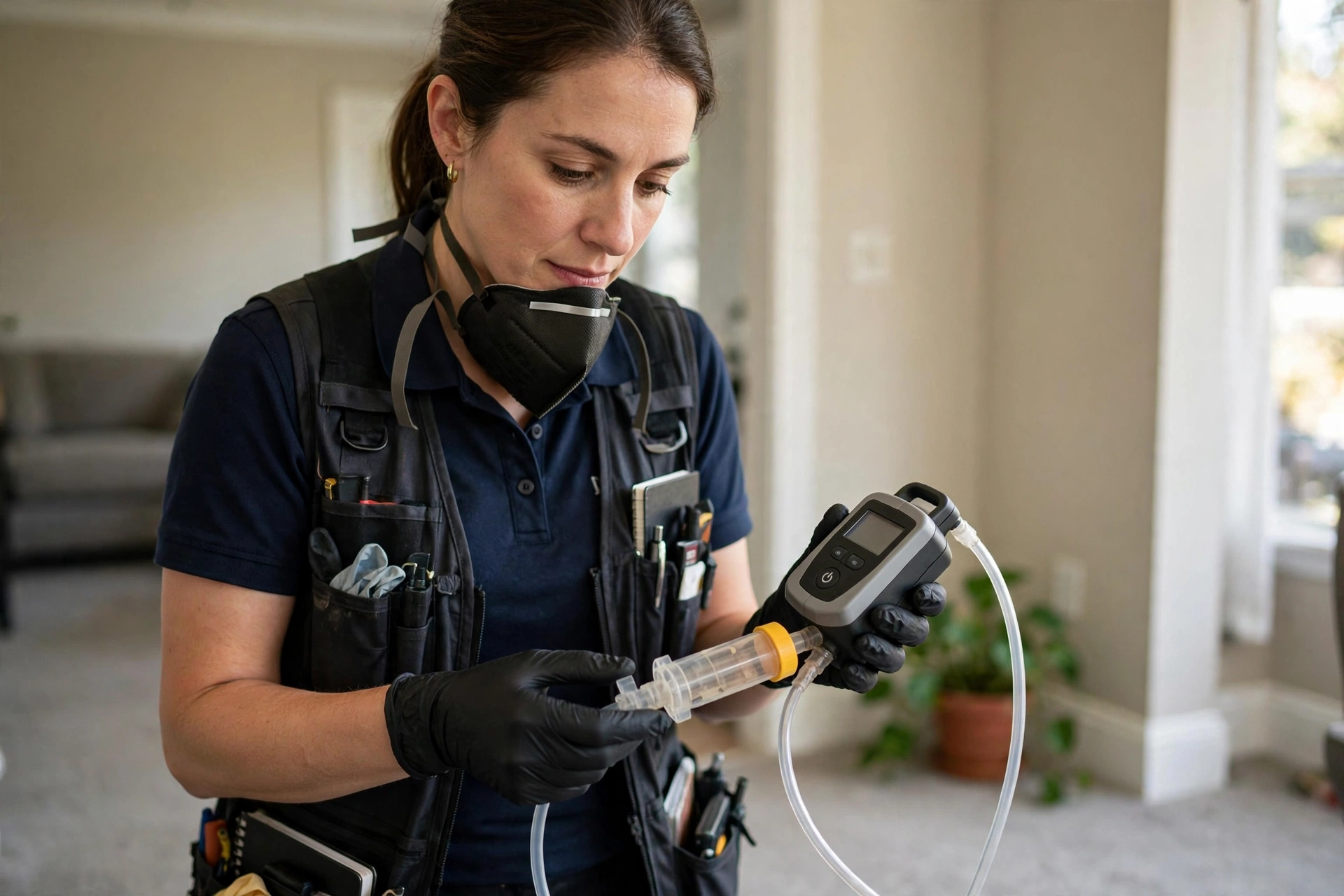
Real talk: testing is sometimes oversold. A lab report listing mold species sounds authoritative, but outdoor air in Georgia contains mold spores year-round, so the mere presence of spores indoors is normal. What matters is whether indoor levels and types indicate an active indoor source. If a company cannot explain that distinction in plain language, get a second opinion before spending money on their testing package.
Cost: DIY vs Professional (National Averages)
DIY mold cleanup is cheap in dollar terms. Protective gear, cleaning supplies, and plastic sheeting for a small job typically run in the tens of dollars. The real cost of DIY is your time and the risk of getting the scope wrong, which is why the size and location guidelines above matter more than the supply bill.
Professional remediation costs vary widely because the scope varies widely. As national industry averages, small contained jobs, such as a single bathroom wall or a small closet, often land in the low thousands of dollars. These are national averages, not quotes, and actual pricing in Georgia markets like Atlanta, Albany, Valdosta, or Gainesville depends on the specific scope, access, and materials involved.
When comparing quotes, make sure you are comparing the same scope. One quote that includes containment, HEPA air scrubbing, moisture verification, and clearance testing is not comparable to a cheaper quote that skips all four. The cheapest remediation bid is often the one that leaves the moisture source unaddressed, which makes it the most expensive option over time.
Red Flags When Hiring a Mold Company
Most mold remediation companies are legitimate, but the industry has its share of operators worth avoiding. Watch for a company that quotes a firm price over the phone without ever inspecting the property. No one can scope mold remediation without seeing the extent of the growth and the moisture behind it. Be wary of anyone who pushes full-house remediation before performing an inspection, or who cannot explain in plain terms what caused the moisture. A company that treats the visible mold but shows no interest in the water source is selling a temporary fix.
Other warning signs include scare tactics about toxic mold designed to rush your decision, demands for full payment before work begins, no written scope of work, and no plan for containment. A professional crew should be able to describe their containment setup, their drying verification process, and what happens if hidden mold is discovered mid-job. If you are evaluating companies, learn how a reputable service operates and ask questions before committing. The quality of the answers tells you most of what you need to know.
Frequently Asked Questions
How do I know if a mold job is too big for DIY?
Measure the visible growth. If it is approaching or beyond about 10 square feet, involves multiple areas, or extends into wall cavities, it is beyond DIY. Also treat it as a professional job if the mold is in the HVAC system, appeared after flooding, keeps returning after cleaning, or you cannot find the moisture source. When the answer is not obvious, an inspection costs far less than a botched DIY attempt.
Is black mold always dangerous, and does it always need a professional?
Not all dark-colored mold is the species people worry about, and color alone does not determine hazard. That said, large patches of heavily pigmented mold growth deserve professional handling because of the spore load released during cleanup, regardless of species. If you are concerned about a specific type, laboratory testing can identify it, but the decision to call a pro should rest more on size, location, and moisture than on color.
Should I get mold testing done before remediation?
Usually not as a first step. If the mold is visible and measurable, an inspection to define the scope and find the moisture source is more useful than a lab report. Testing earns its keep for hidden mold investigations, post-remediation clearance documentation, real estate transactions, and medical questions. Be skeptical of companies that lead with expensive testing before basic inspection.
Can I just paint over mold with mold-resistant paint?
No. Paint, even paint labeled mold-resistant, seals the surface without addressing the growth underneath or the moisture feeding it. The mold continues to grow behind the paint, and in humid Georgia conditions it will eventually bleed through or cause the paint to blister and peel. Remove the mold, fix the moisture, dry the area, then paint if you like.
Will bleach kill mold completely?
Bleach kills surface mold on hard, non-porous materials, but it does not penetrate porous materials like drywall or wood deeply enough to kill embedded growth. On porous surfaces the water content can even feed what remains below the surface. Detergent scrubbing followed by complete drying is the more reliable DIY method, and anything beyond surface growth on hard materials is a job for professionals with proper removal and drying equipment.
How much does professional mold remediation cost compared to DIY?
DIY costs tens of dollars in supplies for a small job. Professional remediation, as national industry averages, typically starts in the low thousands for small contained jobs and rises with the extent of contamination, demolition needed, drying equipment runtime, and clearance testing. The right comparison is not DIY supplies versus a pro quote. It is the cost of doing it right once versus the cost of a failed DIY attempt followed by professional remediation anyway.
Conclusion
The DIY versus professional decision comes down to size, location, and moisture. Small surface patches on hard materials, with the moisture source fixed and proper safety gear, are reasonable weekend projects. Anything large, hidden, HVAC-related, flood-related, or recurrent belongs to a professional crew with containment, HEPA filtration, and moisture verification equipment. Georgia's humidity raises the stakes on every mold job, because moisture is never far away and regrowth happens fast when drying is incomplete. If you are standing in front of a mold problem and honestly cannot tell which category it falls into, that uncertainty is itself useful information. Get an inspection, learn the true scope, and then decide. Mold Remediation Georgia serves homeowners across the state, from Atlanta to bathroom touch-ups to full remediation projects. Call 1 (866) 364-0572 or visit our contact page. Our office is at 1150 Ralph David Abernathy Blvd SW, Atlanta, GA 30310.
References
- U.S. Environmental Protection Agency. (2002). A brief guide to mold, moisture and your home (EPA 402-K-02-003). https://www.epa.gov/mold
- U.S. Environmental Protection Agency. (2008). Mold remediation in schools and commercial buildings (EPA 402-K-01-001). https://www.epa.gov/mold
- Centers for Disease Control and Prevention. (2024). About mold. https://www.cdc.gov/mold
- Institute of Inspection, Cleaning and Restoration Certification. (2015). ANSI/IICRC S520: Standard for professional mold remediation (3rd ed.). https://www.iicrc.org
- University of Georgia Cooperative Extension. (2023). Mold and moisture in the home. https://extension.uga.edu
Mold can't wait.
Serving Atlanta and 44 Georgia cities. Call 1 (866) 364-0572 now.