
Mold Remediation Georgia
Mold remediation Georgia homeowners trust connects homeowners with licensed crews built for a subtropical climate that holds 65 to 75 percent humidity for most of the year, which is exactly the range mold needs to take hold. If you found a dark patch behind the guest bathroom vanity, smelled something musty in the crawl space, or your home inspector flagged moisture readings before closing, you need a crew that can inspect, test, and remove it correctly the first time. We connect Georgia homeowners with licensed mold remediation contractors who handle black mold removal, attic and crawl space treatment, HVAC mold cleanup, and full remediation projects across the state.
Call Now: 1 (866) 364-0572What Atlanta homeowners ask us first
- Is this actually mold, or just surface staining and dirt?
- Will my homeowners insurance cover any of the remediation cost?
- How fast does mold spread once a leak or flood has soaked drywall?
- Can I clean it myself, or does this need a licensed crew?
Signs of Mold in Your Home: A Georgia Homeowner's Guide
Most Georgia homeowners find mold the same way: a strange smell when the air conditioner kicks on, a shadow in the corner of a bathroom ceiling, or a water stain that keeps coming back no matter how many times you paint over it. By the time you can see it clearly, it has usually been growing quietly for weeks or months. The good news is that mold almost always leaves clues long before it becomes a major problem, and if you know what to look for, you can catch it while the fix is still small.
Why Mold Loves Georgia Homes
Georgia sits in a climate zone that mold finds nearly ideal. Average relative humidity runs roughly 65 to 75 percent for much of the year, and during the summer months indoor humidity in a poorly ventilated home can stay above 70 percent for weeks at a time. Mold only needs three things to grow: moisture, a food source, and time. Wood, drywall, paper, dust, and even some paints provide the food. Georgia provides the moisture. All that is left is time.
This is why the EPA treats indoor moisture control as the single most important mold prevention strategy: mold can begin growing within 24 to 48 hours of a material getting wet, and keeping indoor humidity between 30 and 50 percent is the key line of defense (U.S. Environmental Protection Agency, n.d.). In Georgia, holding a home below 50 percent relative humidity through a humid August is a real challenge, which is exactly why mold shows up in places it would never survive in a drier climate.
Common moisture sources in Georgia homes include humid outdoor air entering through crawl space vents and leaky ductwork, condensation on cold surfaces like ductwork and single-pane windows, roof and plumbing leaks that go unnoticed for months, ground moisture wicking up through crawl spaces and basement slabs, and poor ventilation in bathrooms, kitchens, and laundry rooms.
Understanding the sources matters because mold is not really a mold problem. It is a moisture problem wearing a mold costume. If you find mold and only clean the surface without fixing the moisture source, it will return. That single principle explains most of the recurring mold problems in Georgia homes.
Visible Signs of Mold
The most obvious sign is also the easiest to misread. Mold comes in many colors: black, dark green, gray, brown, white, orange, and even pink or red in some bathroom settings. Color alone tells you almost nothing about how serious the problem is, despite what popular articles suggest. What matters is the size of the affected area, how long it has been growing, and what is feeding it.
Look for:
- Discolored patches on walls, ceilings, baseboards, or grout. Black or dark green spotting in bathroom corners and along shower caulk lines is the classic example.
- Fuzzy or slimy textures. Mold colonies often look fuzzy, velvety, or slimy, quite different from ordinary dirt or dust.
- Spreading stains. A brown or yellow water stain that is growing, or that returns after you paint over it, almost always means moisture is still active behind the surface.
- Peeling, bubbling, or cracking paint and wallpaper. Moisture pushes from behind, and paint failure is one of its earliest visible signatures.
- Warped or swollen materials. Baseboards pulling away from the wall, buckled flooring, or soft, spongy drywall all point to prolonged moisture exposure.
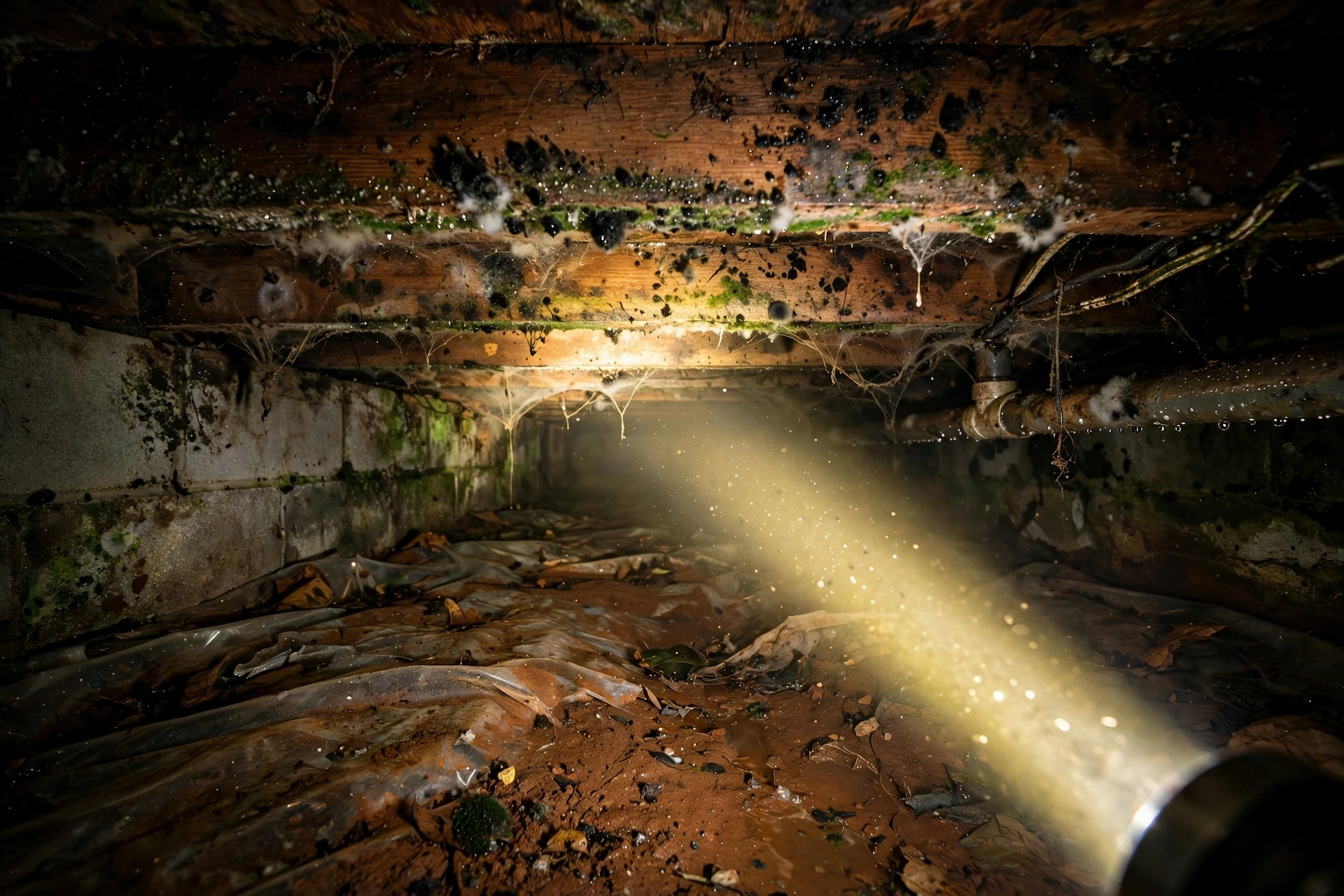
- White, thread-like growth on wood framing in crawl spaces and attics, which homeowners sometimes mistake for dust or cobwebs.
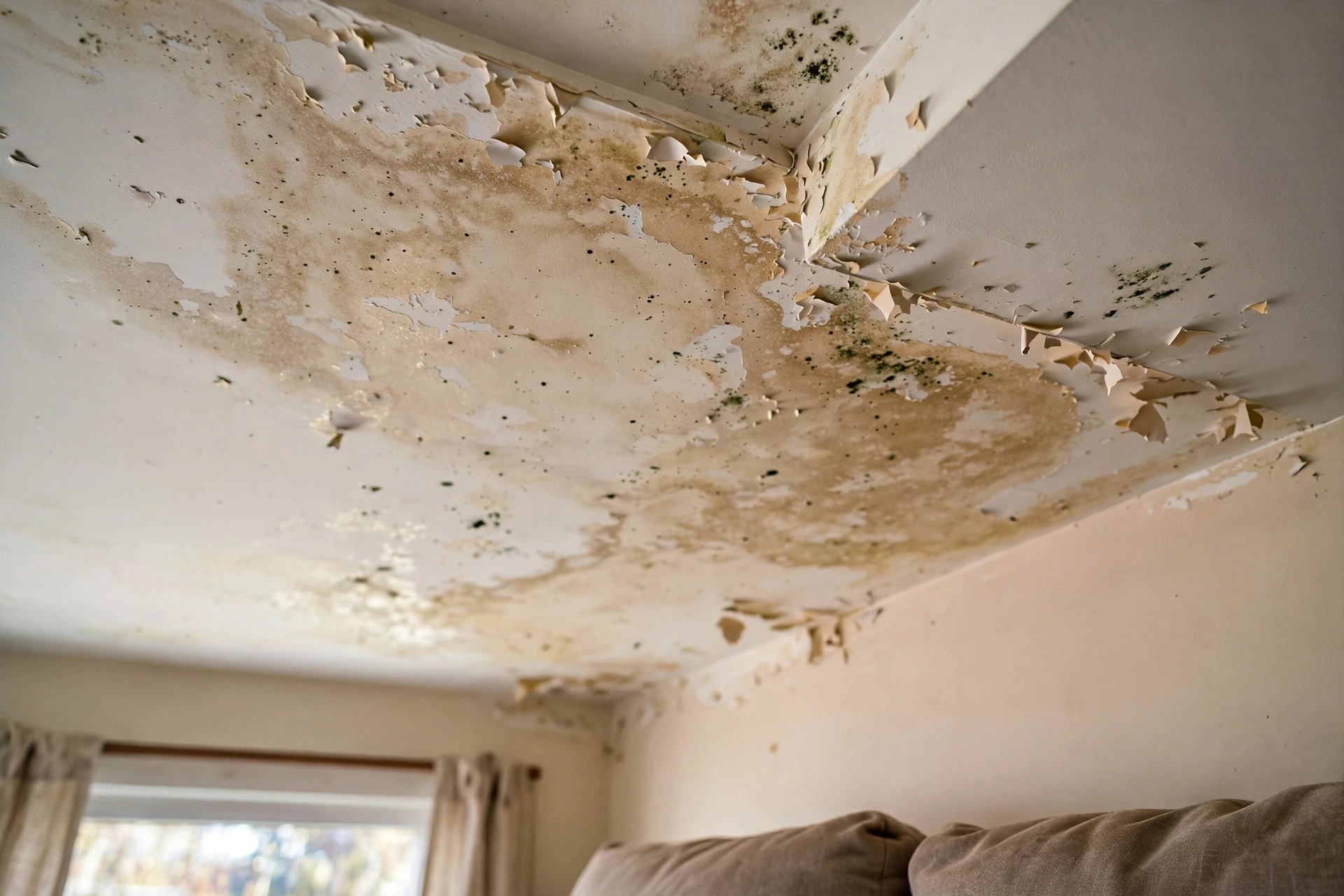
One important rule: do not scrape, sand, or aggressively scrub a large mold patch to "see how bad it is." Disturbing a colony without containment releases spores into the surrounding air. The IICRC S520 Standard treats areas larger than roughly 10 square feet as jobs that benefit from proper containment and negative air pressure (Institute of Inspection, Cleaning and Restoration Certification, 2015). For small spots on hard, non-porous surfaces, careful DIY cleaning is reasonable. For anything bigger, spreading it around the house is the opposite of helpful.
Hidden Signs: What Mold Looks Like Before You See It
Some of the worst mold problems in Georgia homes are the ones nobody sees for months. Hidden mold grows behind drywall, above ceiling tiles, inside HVAC systems, and under floors. It announces itself indirectly, and learning to read those indirect signals is the whole game.
A musty or earthy smell
This is the number one early warning. Growing mold releases microbial volatile organic compounds, which your nose reads as "musty" or "damp basement." If a room smells musty, especially after the home has been closed up, take it seriously even if you cannot see anything. Follow the smell: open closets, pull back furniture, and check the wall or floor nearest to where the odor is strongest. Odors that get stronger when the HVAC runs often point to growth inside the ductwork or air handler, which is a good reason to have a professional look at the HVAC system rather than guessing.
Unexplained allergy-like symptoms indoors
The CDC notes that mold exposure can cause nasal stuffiness, throat irritation, coughing, eye irritation, and skin irritation, and can trigger asthma symptoms in people who have the condition (Centers for Disease Control and Prevention, n.d.). If household members feel congested or sneezy at home but better elsewhere, indoor air quality deserves investigation. Symptoms alone never prove mold is present, but they are a legitimate reason to start looking.
Condensation on windows and ductwork
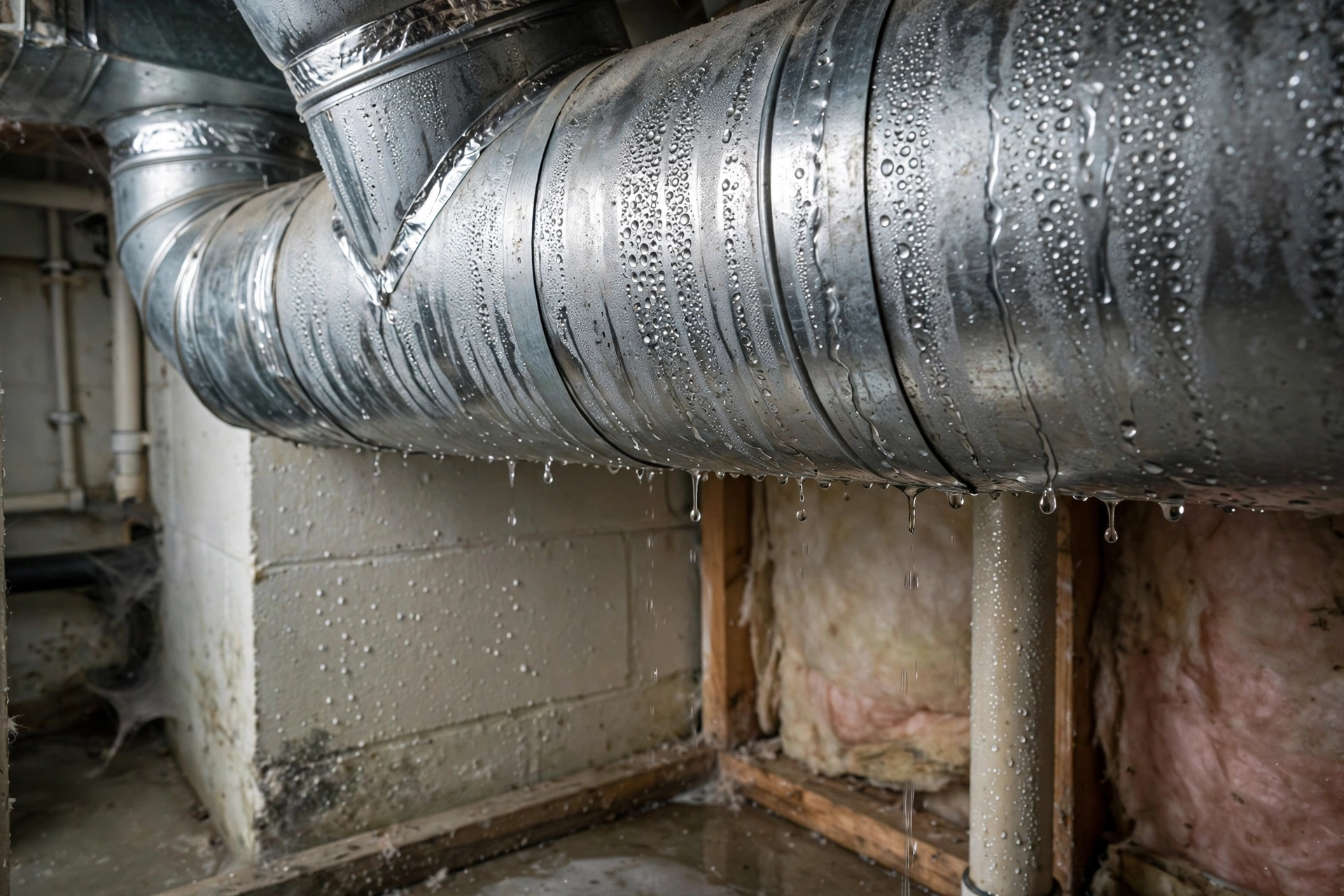
Water beading on the inside of single-pane windows on summer mornings is not just a cosmetic issue. It means indoor humidity is high enough to condense on cool glass, and if it is condensing on glass, it is almost certainly condensing inside wall cavities and on ductwork too. The same logic applies to sweating supply ducts in a crawl space or attic: visible condensation on metal ductwork is a reliable predictor of hidden mold on nearby wood and insulation.
High humidity readings
A ten-dollar hygrometer can tell you more about your mold risk than almost anything else. If indoor relative humidity regularly sits above 60 percent, you are in the range where mold growth accelerates. The American Lung Association recommends keeping indoor humidity below 50 percent to discourage mold and dust mites (American Lung Association, n.d.). Check bedrooms, bathrooms, and any room over or under a crawl space, not just the living room where the thermostat lives.
Real talk: the smell test is more reliable than any home mold test kit you can buy at a hardware store. Those settle-plate kits will grow mold colonies from almost any indoor air sample because mold spores are everywhere, outdoors and indoors, all the time. A lab-grade air quality test with proper outdoor baseline sampling is a different thing entirely. If a company tries to sell you remediation based only on a petri dish you left on your kitchen counter for an hour, get a second opinion.
Room-by-Room Mold Checklist
Walk your home with this checklist once a season. In Georgia, late spring and early fall are good times for a routine look.
Bathrooms
Check grout lines, shower caulk, the ceiling above the shower, the wall behind the toilet tank, and the vanity cabinet floor. Make sure the exhaust fan vents outdoors, not into the attic, and run it for at least 20 minutes after a shower. If the ceiling above the shower is spotted, a bathroom mold remediation plan should start with fixing ventilation, not just scrubbing the spots.
Attics
Look at the underside of the roof sheathing for dark staining or fuzzy growth, check around roof vents and flashing for water stains, and make sure bathroom and dryer exhaust fans do not terminate in the attic. An attic mold inspection is worth scheduling if you see staining you cannot explain.
Crawl spaces
This is where Georgia's worst hidden mold lives. Vented crawl spaces pull in humid outdoor air all summer, and that air condenses on cool ductwork and floor joists. Look for growth on joists and subflooring, standing water or damp soil after rain, and sagging insulation. Homes across the Atlanta metro, from Marietta to Roswell, see this pattern constantly because of the region's clay soils and heavy summer rains.
Basements
Check where the wall meets the floor, corners, and any carpeted areas. Even finished basements can develop mold behind drywall if the foundation wall weeps moisture. Efflorescence, that white chalky deposit on concrete, is not mold, but it proves water is moving through the wall, and where water moves, mold eventually follows.
HVAC closets and ductwork
Pull the air handler filter and look inside the cabinet with a flashlight: dark growth on the blower compartment, coil housing, or drain pan area is a red flag. Check the condensate drain line for clogs and make sure the pan is not holding standing water. Bare or damaged duct insulation in a Georgia attic or crawl space is practically an invitation for condensation and growth.
Kitchens and laundry rooms
Check under the sink for slow drips, behind the dishwasher, and around washing machine hoses and drains. Laundry rooms are sneaky because dryer exhaust adds heat and moisture while the room is often closed off from the rest of the house.
Windows and exterior walls
Look at window sills and tracks for black spotting, check the drywall around window frames for soft spots, and inspect exterior wall bases after heavy rain for signs that water is finding its way in. In homes from Alpharetta to Newnan to Rome, wind-driven rain during spring storms is a common entry point that homeowners do not connect to the mold they find months later.
What to Do When You Find Mold
Finding mold does not mean you need to panic, but it does mean you need a plan. The right response depends on the size of the problem and what caused it.
Step 1: Do not ignore it
Mold does not resolve on its own. Once established, a colony keeps growing as long as moisture is available, and small patches become large ones on a timeline of weeks, not years. A quarter-sized spot on a bathroom ceiling in June can be dinner-plate-sized by September in a humid Georgia home.
Step 2: Find the moisture source
Before cleaning anything, ask what is feeding it: a leak, poor ventilation, or consistently high humidity? Clean the mold but leave the moisture, and it returns within a month or two. This is the step most DIY attempts skip.
Step 3: Decide whether it is DIY or professional
The EPA's widely used guidance draws the line at roughly 10 square feet: smaller areas on hard surfaces can often be handled by a homeowner with gloves, eye protection, and an N95 respirator, while larger areas, growth inside walls or HVAC systems, or mold after flooding should be handled by professionals (U.S. Environmental Protection Agency, n.d.). Black mold indicates a long-term moisture problem, and black mold removal is best done with proper containment.
Step 4: Protect yourself during cleanup
Never dry-scrape or sand moldy material. Never mix bleach and ammonia. Ventilate the work area, wear an N95 respirator, gloves, and eye protection, and bag moldy porous materials (like drywall sections or carpet) in sealed plastic before carrying them through the house. Keep children, elderly family members, and pets out of the work area.
Step 5: Dry everything completely
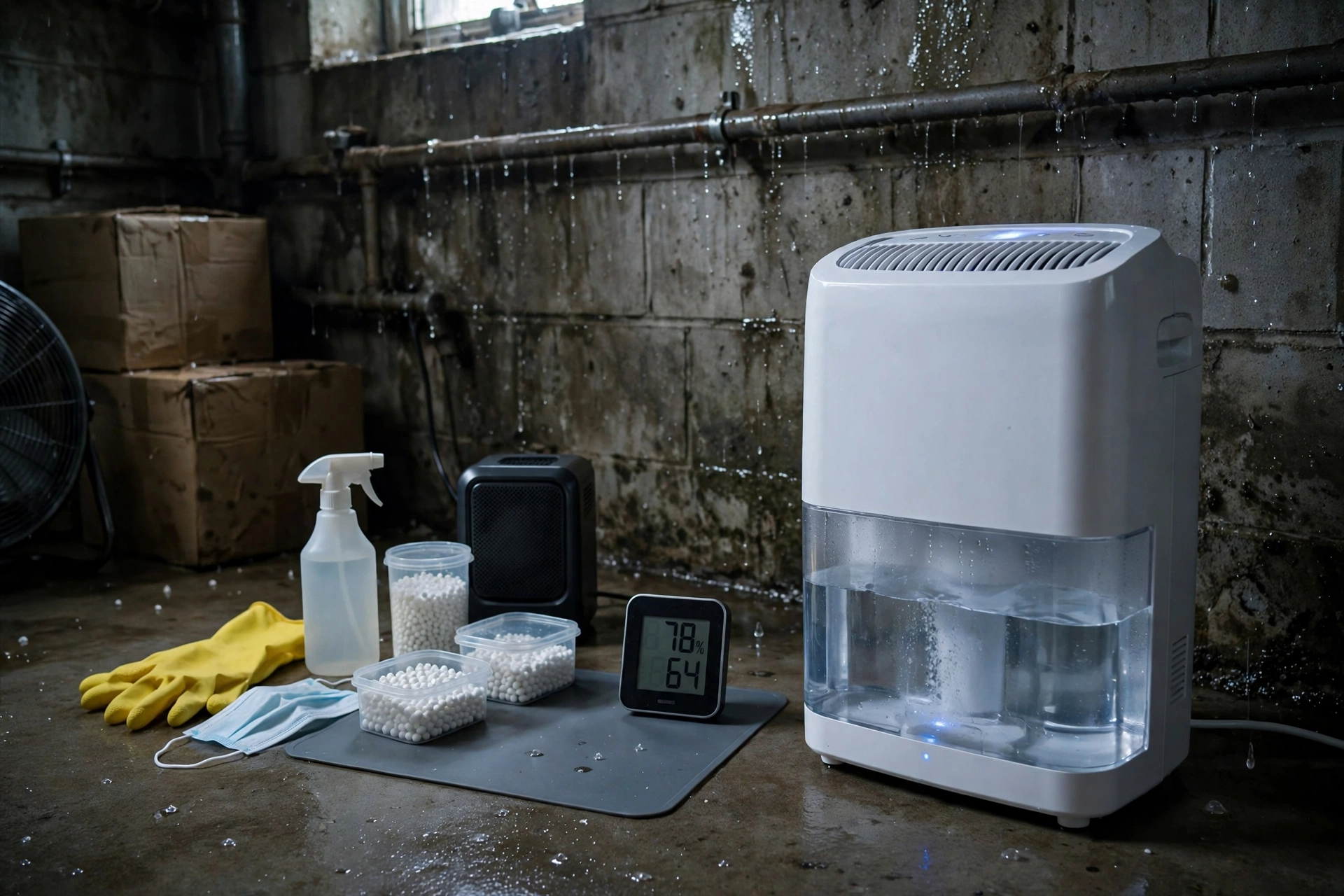
After removal, the area must be dried to normal moisture levels and stay dry. A dehumidifier running for several days with good airflow does more long-term good than any cleaning product. If material cannot be dried within a day or two, it usually needs to come out.
Real talk: bleach is not the mold cure the internet thinks it is. On hard, non-porous surfaces it can kill surface mold, but on porous drywall and wood, bleach does not reach the roots, and the water in the solution can feed the growth you cannot see. Scrubbing moldy drywall with bleach and calling it fixed is one of the most common ways a small problem becomes a hidden, spreading one. Removing contaminated porous material and fixing the moisture source beats any spray bottle, every time.
Mold Inspection vs. Mold Testing: Which Do You Need?
These two services are constantly confused, and some companies use the confusion to upsell:
- A mold inspection is a visual and moisture-focused assessment: where is the mold, how big is it, what is the moisture source, and what needs to happen to fix it. This is the starting point for nearly every mold problem, and it is what produces an actual remediation plan.
- Mold testing (air or surface sampling) measures what is in the air or on a surface against outdoor baseline levels. It is most useful when you need documentation: a real estate transaction, an insurance discussion, or post-remediation verification.
A professional mold inspection comes first in almost every case. Testing without an inspection is data without a diagnosis: a lab report that says "elevated spore counts" does not tell you where the water is coming from. Reputable companies will explain which service fits your situation, and they will not push a full remediation plan before anyone has looked at the property in person.
How to Keep It From Coming Back
Prevention is genuinely cheaper and simpler than remediation, and in Georgia's climate it is mostly about moisture management:
- Keep indoor humidity between 30 and 50 percent with air conditioning and, where needed, a dedicated dehumidifier in basements and crawl spaces.
- Ventilate wet rooms. Bathroom fans should vent outdoors and run during and for 20 minutes after showers.
- Fix leaks fast. The 24 to 48 hour window matters: materials dried within a day or two of getting wet usually do not grow mold at all.
- Insulate cold surfaces like ductwork and refrigerant lines to reduce the condensation that feeds hidden growth.
- Direct water away from the house with clean gutters, extended downspouts, and grading that slopes away from the foundation. Across metro Atlanta, foundation moisture from poor drainage is a top driver of crawl space mold.
- Consider a crawl space dehumidifier or encapsulation if your crawl space runs damp every summer. It is a bigger investment, but for chronic crawl space moisture it is often the only lasting fix.
If you are budgeting for professional help, understanding typical mold removal costs in Georgia will help you evaluate quotes: legitimate estimates are based on an in-person inspection, not a phone quote. When you are ready, contact Mold Remediation Georgia at 1 (866) 364-0572.
Frequently Asked Questions
How can I tell if that dark spot is mold or just dirt?
Dirt wipes away cleanly; mold usually leaves staining behind and often returns within days or weeks after cleaning. Mold also tends to have a fuzzy, slimy, or velvety texture, and it spreads outward from a moisture source. If the spot is near a window, plumbing, or an exterior wall, or if the area smells musty, treat it as mold until proven otherwise. A professional inspection can confirm it definitively.
Can mold grow in my house if there is no visible leak?
Yes, and in Georgia this is extremely common. Indoor humidity above 60 percent is enough to sustain mold growth on its own, especially in poorly ventilated spaces like attics, crawl spaces, and HVAC closets. Condensation on ductwork, single-pane windows, or cold water lines creates enough moisture for colonies to establish without any plumbing failure at all.
My house smells musty but I cannot find any mold. What should I check first?
Start with the HVAC system, since odors that strengthen when the air conditioner runs usually point to growth in the ducts or air handler. Then check the crawl space and attic, the two most common hidden locations in Georgia homes. If the smell persists with no visible source, a moisture-focused inspection with moisture meters is the next step.
Is black mold more dangerous than other colors of mold?
Color alone does not determine health risk. "Black mold" usually refers to Stachybotrys chartarum, which indicates a long-term moisture problem, but many dark-colored molds are common and relatively benign. What matters far more than color is the size of the growth, the duration of exposure, and the sensitivity of the people in the home.
Should I get mold testing before calling a remediation company?
In most cases, no. An inspection comes first: it identifies where the mold is, how extensive it is, and what moisture source is feeding it. Testing is most valuable when you need documentation, such as for a real estate transaction, an insurance claim, or post-remediation verification. Be cautious of any company that insists on expensive testing before anyone has visually inspected the property.
How often should I check my home for mold in Georgia?
A seasonal walkthrough, spring and fall, covers most homes: check bathrooms, the attic, the crawl space, the HVAC closet, and anywhere you have had leaks before. After any significant water event, a roof leak, a plumbing failure, or storm flooding, check the affected areas within 24 to 48 hours and keep an eye on them for several weeks, since mold can begin growing in that window even if everything looks dry on the surface.
The Bottom Line
Mold in a Georgia home is almost never a mystery once you know the signs. Musty smells, water stains, condensation, and high humidity readings are your early warnings; visible growth, peeling paint, and warped materials are your confirmation. The response that works is the same: find the moisture, remove what cannot be cleaned, dry everything thoroughly, and keep humidity below 50 percent afterward. Catch it early and the fix is small.
If you have found something concerning, or if a musty smell will not go away no matter what you try, a mold inspection can give you real answers. Mold Remediation Georgia, 1150 Ralph David Abernathy Blvd SW, Atlanta, GA 30310, serves homeowners across the state. Call 1 (866) 364-0572 or reach out online.
References
- American Lung Association. (n.d.). Mold and dampness. https://www.lung.org
- Centers for Disease Control and Prevention. (n.d.). Basic facts about mold and dampness. https://www.cdc.gov/mold
- Georgia Department of Public Health. (n.d.). Mold. https://dph.georgia.gov
- Institute of Inspection, Cleaning and Restoration Certification. (2015). ANSI/IICRC S520: Standard for professional mold remediation (3rd ed.). https://www.iicrc.org
- U.S. Environmental Protection Agency. (n.d.). A brief guide to mold, moisture and your home (EPA 402-K-02-003). https://www.epa.gov/mold
Mold can't wait.
Serving Atlanta and 44 Georgia cities. Call 1 (866) 364-0572 now.